

Below is a detailed history of the Branch provided by comrade Judy Tuck:
Royal Canadian Legion History
The Royal Canadian Legion was founded in the mid-1920s under its original name, the Canadian Legion of the British Empire Service League. The founding ceremony took place at the Marlborough Hotel in Winnipeg, Manitoba. Winnipeg had recently been the site of the 1919 General Strike, reflecting widespread social unrest among working-class Canadians and returning First World War veterans. In this context, the creation of the Legion was a vital step toward advocating for veterans’ rights and providing fellowship and support for those who had served.
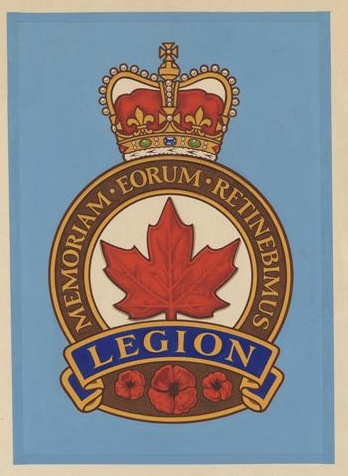
Harriston Legion Branch 296
Founding Years
Royal Canadian Legion Branch 296 in Harriston was established in 1939, as the Great Depression was ending and another world war was approaching. The founding members were local First World War veterans who wished to continue advocating for veterans’ support while maintaining the camaraderie they shared with fellow service members. Like many veterans, they found it difficult to discuss their wartime experiences with civilians, and the Legion provided a safe and understanding space for connection.
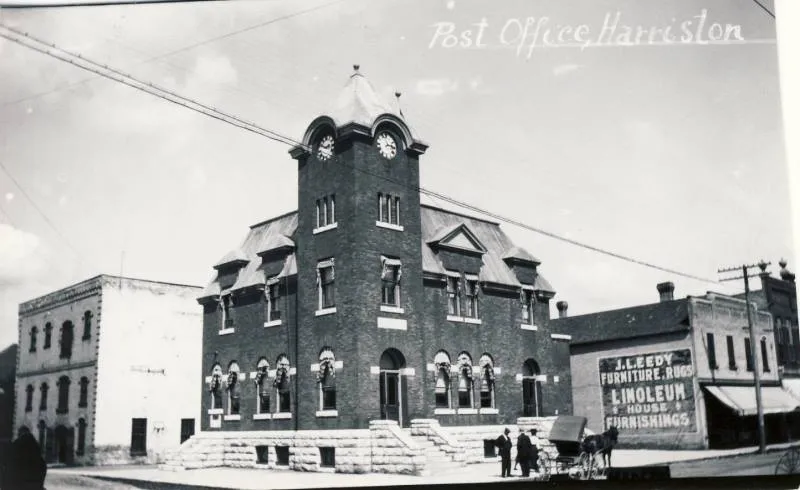
The Charter President was Graham Hastie, a First World War veteran and prominent local businessman. His family operated a blacksmith shop on the site where the Old Post parking lot is now located. After the war, Mr. Hastie ran a barbershop in the building beside the Old Town Hall (now a restaurant), followed by a hardware store located where Richenback’s Accounting Office now stands.
Early Meeting Spaces and the Ladies’ Auxiliary

In its early years, the branch met in a small building at the junction of Mill, Elizabeth, and Webb Streets, across from the library parking lot. In 1947, the branch purchased the current building, and the Ladies’ Auxiliary was formed at the same time, with J.V. Keighly serving as its first president. The Ladies’ Auxiliary has played a vital role in the success, operations, and financial support of Branch 296 ever since.
The Legion Building Through the Years
The Legion building has a long history. Two previous structures on the site were destroyed by fire. The current building was constructed in 1920 as Thomas Johnson’s implement shop. He shared the space with automobile dealers Fred Murphy and A.C. Helwig, who later partnered with Walter Grosz. Their dealership eventually moved to the location formerly occupied by the CIBC bank.
When the Legion purchased the building, the west half was used as a clubroom, while the east half continued to operate as an implement dealership: first under P.C. Cowan until 1966, and later Ivan Gilmore from 1967 to 1974.
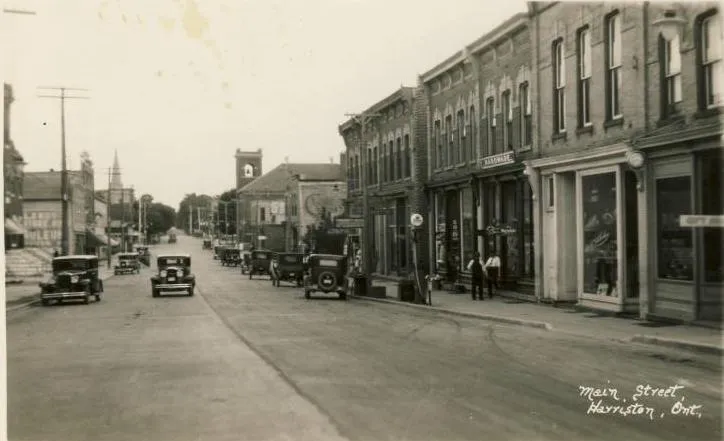
In 1974, the Legion expanded into the entire building and established the Maple Leaf Room. The upper floor served as an auditorium, heated by four pot-bellied stoves. Entry was available from what is now the rear clubroom door, as well as from Elora Street via a long staircase. During the 1960s and early 1970s, the auditorium was a popular venue for Saturday night dances, including a well-attended Christmas night dance that brought the community together.
Renovations and Modernization
A major renovation took place in 1985, including an addition that created a new foyer, staircase, elevator, and the Memorabilia Room. In more recent years, the upper floor was reconfigured to expand kitchen space and update washroom facilities, ensuring the building remains accessible and functional for the community.
Evolving Mission and Community Service
During the Second World War, the First World War veterans of Branch 296 were determined to make the transition back to civilian life easier for returning veterans. By 1955, many veterans had successfully reintegrated, and the Legion’s focus expanded to include broader community service.
Programs developed during this time included seniors’ activities such as jamborees and euchre, youth and sports programs, track and field, and the Remembrance poster, literary, and public speaking contests. Winners of these contests continue to be honoured at the branch’s annual Remembrance Day banquet.
During the 1950s, the organization’s name evolved: first becoming The Canadian Legion, and later receiving permission to add “Royal,” becoming the Royal Canadian Legion.
Membership Growth and Remembrance
In the 1970s, Legion membership expanded to include Associate members (relatives of veterans) and Affiliate members (those without a direct family connection). These members initially held non-voting status, but in 1980, they were granted full voting rights.
Today, “Lest We Forget” remains at the heart of Branch 296’s mission. The branch is deeply grateful for the continued support of the Harriston and Clifford communities at Remembrance services and events. Branch 296 is also proud to have been one of the first branches to establish a Veterans Banner Program, a meaningful initiative that has since been adopted by many other communities.